This deck requires desktop: keyboard navigation, large canvas visuals, and embedded media work best on a laptop or desktop browser.
←
→
XR Solutions for Industries
The Rehearsal Gap
I — The Night
01 — 26
North Atlantic — 41°46′ N, 50°14′ W
11:40 PM
April 14, 1912. The most advanced machine ever built is four days into her first voyage.
She was called unsinkable.
The press believed it. The owners believed it.
The 2,200 people aboard believed it most of all.
11:40 PM — the lookout rings the bell three times
The ship has 2 hours and 40 minutes to live.
Almost no one aboard behaves like it. The deck is lit and warm. The boats are small and dark, hanging seventy feet over black water.
People step back from the rail. Why leave a ship that cannot sink?
Lifeboat No. 7 — the first to leave
0
of 65 seats.
Boat after boat goes down the same way. Half empty. By choice.
The part almost nobody tells
The lifeboats had been tested before the voyage — lowered fully loaded, all 65 seats, from 70 feet up. The gear held.
The test results never reached the crew.
So the officers — careful men, doing their best — put 25 people in each boat, afraid the ropes would snap. And lowered the empty seats into the sea, boat after boat.
And the lifeboat drill scheduled for that very morning —
Cancelled.
No crew ever practiced. No boat was ever lowered. On the ship's only voyage, no one's hands had ever done the thing.
She did not lack equipment.
She did not lack procedure.
She did not lack information.
She lacked rehearsal.
0
seats in the lifeboats that night
0
people saved
This is not a story about a ship.
It is a story about the distance between knowing and having done — and every industrial plant on earth runs on that same gap.
The manuals exist. The classroom happens. The certificate gets signed. And the first real encounter still happens on live equipment, under pressure, with a senior operator explaining from memory.
What the night proved
Under pressure, people don't rise to the level of their knowledge.
They fall to the level of their rehearsal.
Why rehearsal wins
Memory is visual before it is verbal.
01
In studies repeated for over fifty years, people shown 2,500 pictures could still recognize about 90% of them days later — after seeing each for ten seconds. Nothing written or spoken comes close. Psychologists call it the picture superiority effect.
02
Skill is built by doing — and doing begins with seeing the real thing, at real size. The eyes rehearse before the hands can. What people call muscle memory starts as spatial memory: the shape of the machine, the reach to the valve, the way out.
03
The closer training stands to reality, the more of it stays. People trained in immersive 3D learn up to 4× faster than in a classroom, and are 275% more confident using the skill — PwC's enterprise study, not our marketing.
The Tribe Team — how we close the gap
We build the plant you can practice on.
XR — the bodySee it. Stand in it.Headsets, iPads in the field, wraparound training rooms — your people inside their machinery, at full size.
×
AI — the mindKnow it. All of it.Cameras that recognize equipment and check the work; systems that remember everything the plant has done.
=
The Tribe layerRun it, better.A plant your people practice on, ask questions of, and design against — every hour becoming memory.
1.1 Machinery Training
1.2 Real-World Twin
1.3 On-Site AR Validation
2.1 Remote Assistance
2.2 The Living Twin
Separately they're demos. Together they're an operating capability. Five ways in — training first. For each: first you'll see it, then we'll break it down.
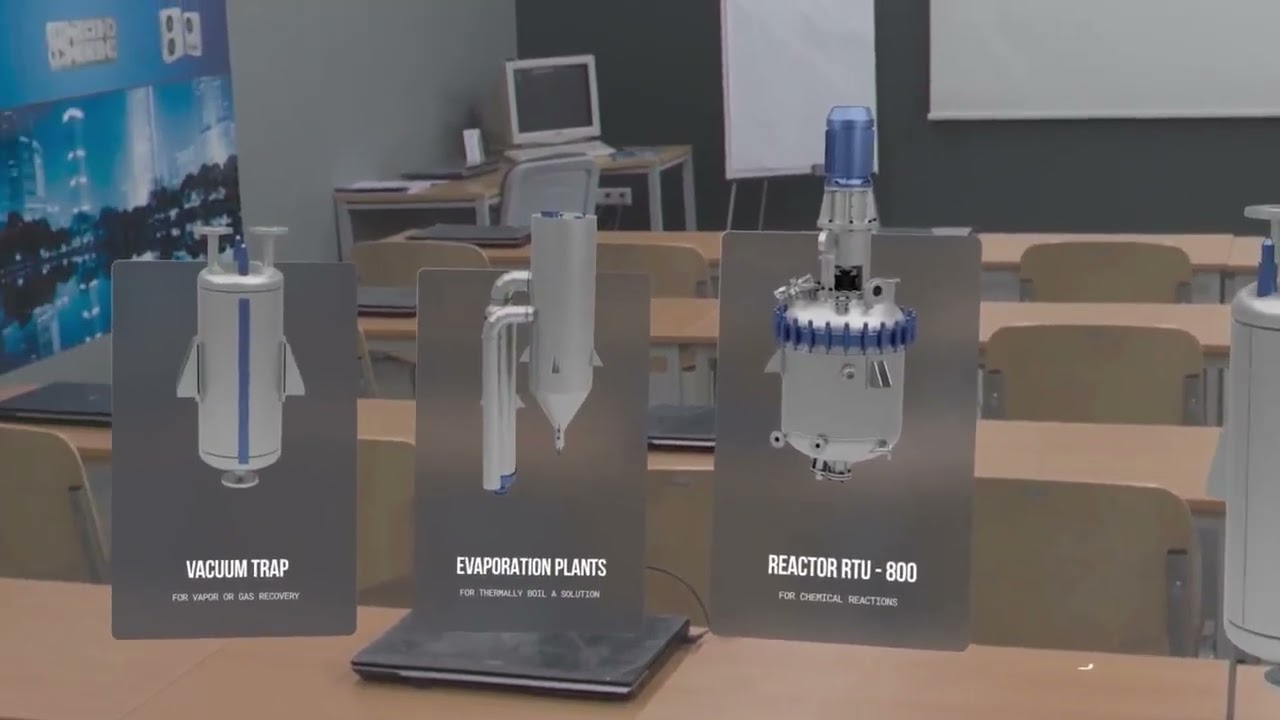
1.1 Mixed-Reality Machinery TrainingFilm 1 of 2
See the machine. Then hold it.
Full-scale machinery in mixed reality — walk around it, open it up.Play · advance when ready →
1.1 Mixed-Reality Machinery TrainingFilm 2 of 2
Experts in the same space.
A trainer anywhere in the world, teaching on the same machine, live.Play · advance when ready →
1.1 / Training
Mixed-Reality Machinery Training
You cannot learn a 40-tonne machine from a slide — and you cannot shut one down so forty trainees can crawl through it.
A
The machine's own 3D engineering files, life-size in the room — walk around it, pull it apart with your hands, break it a thousand times safely.
B
Built as your real procedures, step by step: shut it down, open it up, inspect, reassemble, check the torque.
C
An expert anywhere joins the same virtual room — while the system records every step, stall, and repeat. Evidence, not attendance sheets.
TodayMonths of classroom, then shadowing a senior.
4×faster to competent
With 1.1Weeks — hands trained before touching steel.
PwC enterprise study · +275% confidence applying the skill
1.2 The Real-World Digital TwinFilm 1 of 2
Your facility, explorable anywhere.
A real plant, photographed into a precise digital copy — open it in a browser.Play · advance when ready →
1.2 The Real-World Digital TwinFilm 2 of 2
Train inside your own plant.
Guided exercises and timed emergencies, inside the captured facility itself.Play · advance when ready →
1.2 / Training
The Real-World Digital Twin
Most training happens in a generic nowhere. Incidents happen in a specific somewhere — your unit, your valve, your escape route.
A
Laser scanners, 360° cameras, and drones photograph your facility into a precise digital copy — open it in any browser or iPad.
B
Daily rounds, valve checks, and escape routes become guided exercises inside it — then timed emergencies raise the stakes.
C
The same copy plays on wraparound screens in a training room — the whole crew stands inside the unit together, no headsets needed.
TodayOne emergency drill a year, on paper.
50×more real rehearsals a year
With 1.2A leak, a trip, an alarm flood — every week.
PwC · break-even at 375 learners · 52% cheaper at 3,000
1.3 On-Site AR Training & ValidationFilm 1 of 1
The machine teaches itself.
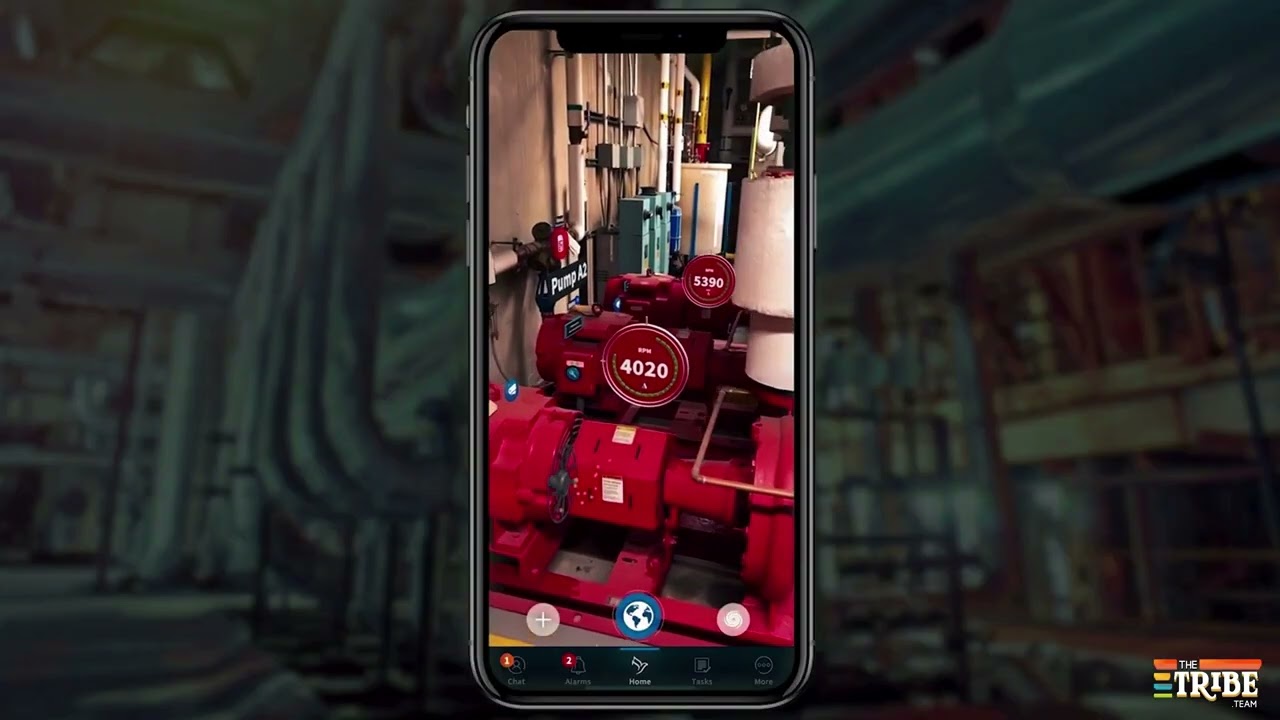
Point an iPad — the steps appear on the machine, and the camera checks the work.Play · advance when ready →
1.3 / Training
On-Site AR Training & Validation
Paper procedures can't see. They can't tell a trainee they're at the wrong valve — or tell you the step was actually done.
A
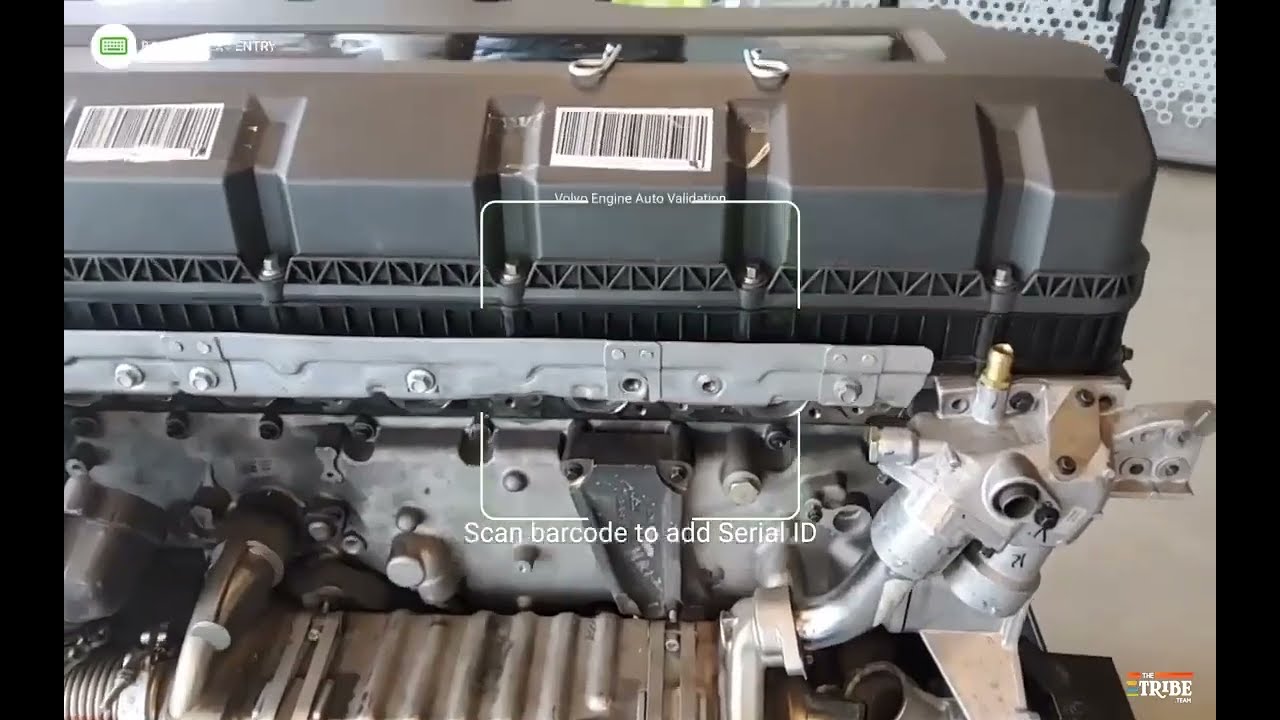
Point an iPad at the machine — the camera recognizes it and loads the right procedure for that exact unit.
B
Each step pins itself to the real part: this valve, this bolt, this gauge — with warnings and limits in view.
C
The camera confirms each step was done before allowing the next — and files photo-stamped proof automatically.
TodayMistakes surface at the audit, weeks later.
≈0errors reach the record
With 1.3The camera checks each step as it happens.
Boeing · 25% faster wiring · Airbus: 3 weeks → 3 days
2.1 AR Remote AssistanceFilm 1 of 2
The AR layer on a video call.
The expert draws instructions directly onto what the technician sees.Play · advance when ready →
2.1 AR Remote AssistanceFilm 2 of 2
An expert on site, in seconds.
A real remote-assistance call, fault to fix — continents apart.Play · advance when ready →
2.1 / Maintenance
AR Remote Assistance
The engineer who can hear a failing bearing is one person, on one continent. Diagnosis shouldn't wait for a flight.
A
The field technician streams what they see; the expert draws instructions directly onto the live view — this pipe, this reading, this bolt.
B
No flights, no waiting for a seat — while unplanned breakdowns cost the average offshore operator about $38M a year.
C
Every solved problem is recorded — the fix stops disappearing when the call ends, and starts building the plant's memory.
TodaySpecialist lands in days; the plant waits.
Minutesto expert eyes on the fault
With 2.1Expert drawing on the live view, instantly.
Plants change for decades — and the drawings quietly stop matching what's actually built.
A
The digital copy your people train on becomes the single source of truth for what actually exists on the ground.
B
New designs are tested against that reality — a clash shows up on screen months before a fitter finds it in steel.
C
AI keeps the plant's whole history — every scan, every fix, every change — inside your own cloud, under your own permissions.
TodayClashes found in steel, mid-installation.
Monthsearlier — on screen, not steel
With 2.2Designs tested against captured reality.
Millimeter-accurate capture as the design baseline
Where this starts
Training first.
Fastest proof of value. Zero risk to operations. And the phase that pays for the next two.
Phase 01 — NowTrainMachinery modules and the first digital copy of a unit. Competence measured against your baseline, inside a quarter.
→
Phase 02MaintainRemote assistance and camera-checked field procedures on the assets you already captured.
→
Phase 03DesignThe living twin as the ground truth for diagnosis, redesign, and upgrades — decided against reality.
None of this is speculative: one global energy major was running remote mixed-reality inspections of a Singapore plant from Houston as far back as 2018, and wraparound immersive rooms are in daily use at peer companies. What most operators are missing is a partner who treats this as an operating capability, not a demo.
The drill was on the schedule.
It just never happened.
Your crew's worst day is already on the calendar somewhere. The only question is whether they meet it for the first time — or the fortieth.
Start with training. We'll bring the plant.
XR and applied-AI systems for industry — oil & gas, defence, museums, real estate — shipped as operating capabilities, not demos. This deck runs on the stack we deploy.
 Designed for desktop